ABOUT US
THE START OF SOMETHING BIG
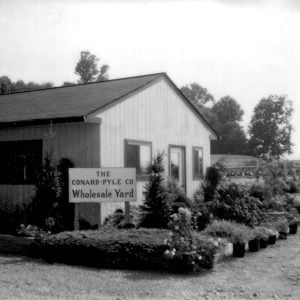
On the third of June 1897, a small Pennsylvanian nursery incorporated as The Conard and Jones Company, a mail-order firm specializing in roses, plants and seeds. As soon as they began, their destiny changed. In 1899, a young Robert Pyle was hired as a helper. The company had no idea just how helpful Pyle would be.
Robert quickly proved to be management material with a head for business and a heartfelt desire to please customers. Robert also had a love for roses. In fact, his love for roses and ambition to share them with the rest of the world emboldened him to make an unprecedented business promise - he guaranteed his rose plants would grow and bloom. The skeptics chided him but the East's gardeners applauded. And Robert Pyle developed his vision.
In 1908, Robert focused The Conard and Jones Company's efforts exclusively on roses and backed it up by creating the Star® Roses trademark to brand and market their qualified selection of superior plants. His innovation and foresight led his company's owners to cement his place in horticultural history. In 1925, The Conard-Pyle Co. was born.
THE MEETING OF THE MINDS
In 1932, Robert Pyle took his first trip to Europe and met Francis Meilland, a young rose breeder from a lineage of rosarians devoted to the creation of distinctive, innovative and beautiful roses and marketing them worldwide as Meilland International. Their mutual affinity for roses made them instant colleagues.
One year later, Pyle arranged an extensive tour of the United States rose industry for Meilland. It was Pyle's horticultural acumen and innovative marketing that Meilland recognized above his peers, and at the end tour, Francis and Robert formed a business alliance. The house of Meilland would send their roses to Conard-Pyle for testing, evaluating and marketing in the U.S. Star® Roses would become the exclusive U.S. marketer of Meilland International's revolutionary breeds. And would become the path for 'Peace'.
PROTECTING THE INNOVATORS
Back in the States, Robert was busy breaking new ground for rose breeders. New rose development has a long been a 1:10,000 ratio. Incredibly, that meant for every 10,000 crosses including the labor, land and time - only one would prove to be desirable. Breeders were seldom rewarded for their work. Typically, they only saw proceeds on their initial sale of a new flower and then lost their horticultural offspring to a world of gray marketers who grew and sold the new creation without any compensation to the originator. With the solid backing of Pyle and a few of his innovative colleagues, the U.S. Patent Act was amended in 1930 to include plants. From that point forward, creators of new varieties of plants were accorded the same rights as any other inventor, and plant patents enabled breeders to be rewarded for their efforts.
SETTING THE STANDARD
With the flood of new rose varieties coming into the U.S. market every year - many untested and unproven - American consumers were getting lost in the maze of new introductions. Robert Pyle saw this as a critical problem for gardeners. He and his colleagues joined forces to create an independent organization called the All-American Rose Selections (AARS). AARS' impact on the industry has benefited growers and gardeners. The high standards have weeded out inferior varieties and rewarded innovators with recognition that directly impacts their success. Gardeners have benefited from the nationwide independent testing system that ensures hardier, more disease-resistant and more beautiful roses.
"THE ROSE OF THE CENTURY"
In 1939, the Second World War was overcoming France. With invasion imminent, Francis Meilland sent budwood of a new variety he created from a crossing five years earlier to his colleagues in Italy, Turkey, Germany and to Conard-Pyle in the U.S. Meilland hoped to send to safety his beloved wartime refugees - one of which was named '3-35-40'- in his hybridization journal - in which he saw the first glimmer of potential greatness. And the war disengaged his communication with the outside world. And with 3-35-40.
It wasn't until 1944 when a letter from Robert Pyle sounded the first trumpet of this new crossing. Pyle wrote, "Whilst dictating this letter my eyes are fixed in fascinated admiration on a glorious rose. Its pale gold, cream and ivory petals blended to a lightly ruffled edge of delicate carmine. I am convinced it will be the greatest rose of the century." As France was liberated, news of Meilland's new rose started flooding in.
The rose was of the moment and for the century. It was christened 'Peace' amidst a flurry of doves at the Pacific Rose Society's spring show on April 25, 1945 - the very day Allied forces captured Berlin. On V-E Day, May 8, 1945, at the first United Nations Conference in San Francisco, each of the 49 international delegates received 'Peace' blooms. The day the WWII ended in Japan, 'Peace' was honored as the All-American Award winning rose. On the September day in 1951 when Japan signed the peace treaty, The American Rose Society made 'Peace' the first rose to receive their Gold Medal award.
The world wanted peace. Meilland and Star® Roses gave them the symbol.
CHALLENGES TO A NEW ROSE CULTURE
While the nations rebuilt themselves, the love affair with the rose grew on a global scale. And while rose breeders in the U.S. enjoyed trademark, patent and AARS protection, European breeders were still the targets of horticultural pirates. Since 'Peace' topped every hit list, Francis Meilland wanted to protect his prize and the future of rose breeding.
BETTERMENT OF THE BREED
Meilland's alliance with Pyle and trips to the U.S. enlightened him to the world of patent protection for plant inventions. Meilland's creations were protected in the U.S. but were outside the law in his home France. Spending his life a lover of roses, he was now going on the road to champion their cause.
Finally, in 1954 a German court officially delivered a patent for a rose. Francis Meilland had won his first victory on the horticultural invention front. He spent the rest of his career campaigning Europe to gain support among breeders. Twelve years after his death, the French Parliament of 1970 voted into law granting patent rights to plant creations. Meilland had opened the door for all inventors and today the industry is still reaping the rewards.
STILL GROWING STRONG
For nearly 70 years, the relationship between Conard-Pyle and Meilland International had benefited growers, gardeners and appreciators of the rose worldwide. Jointly under the Star® Rose brand, they have introduced hundreds of remarkable roses to our growing rose community.
Brilliant stars in this constellation include: 'Peace,' 'Eden Climber,' Bonica™, Carefree Wonder™, Carefree Delight™, 'Sonia,' The Meilland™ Family of Landscape Roses, the Sunblaze® Family of Roses and the Romantica® Family of Roses.
If you're new to roses, welcome to a community of cultivated passion. If you're a rosarian, welcome home. We create Star® Roses for you. We are Meilland Star® Roses. |